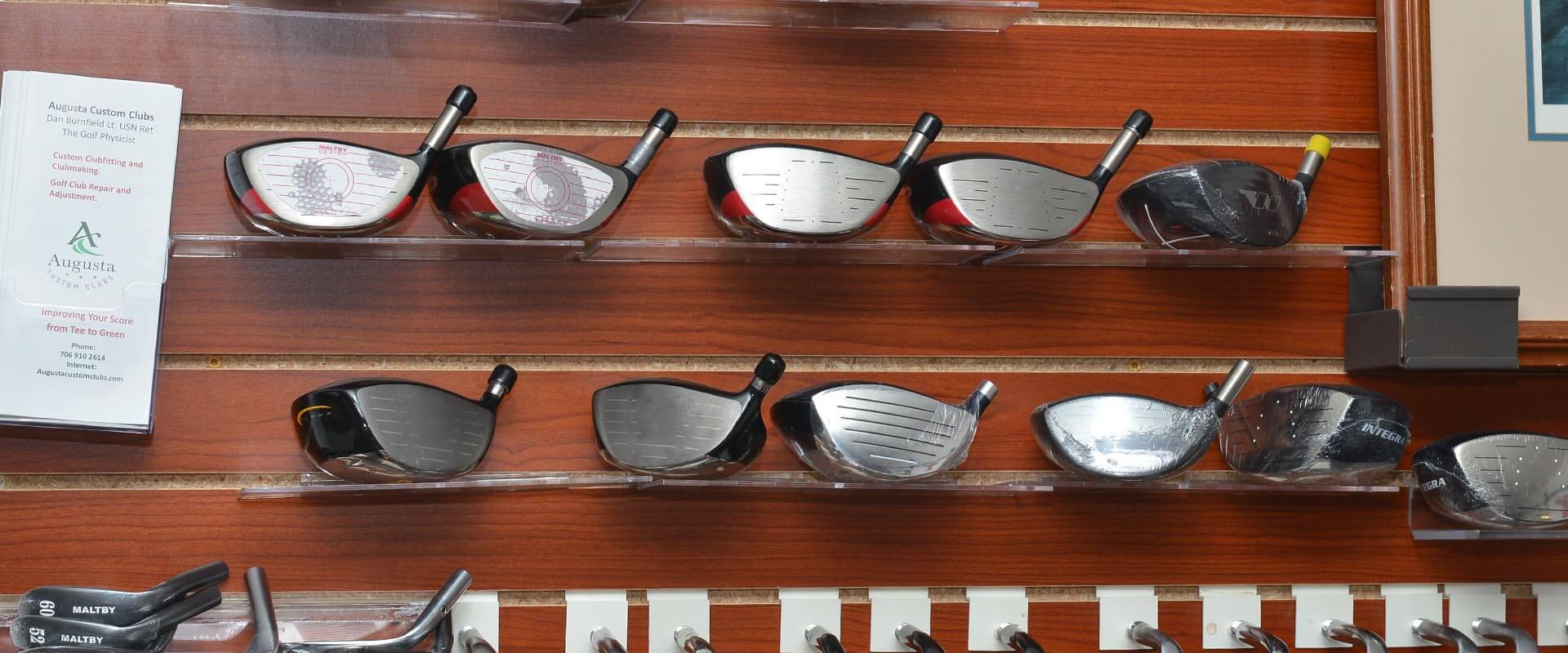
Many golfers who shoot between the mid-80s and 100 tell me the same thing: "I'm not good enough to get fitted for a driver." They assume custom fitting is for single-digit handicappers and that an off-the-rack driver is good enough for their game.
According to golf club designer Tom Wishon, who has spent more than 30 years researching clubfitting, that is the biggest myth in golf equipment. His research shows that average to higher-handicap golfers gain more from professional fitting than low-handicap players do. As an authorized Wishon Golf fitter and TPI Level 3 golf professional here in Augusta, that is exactly what I see in my fitting studio.
Tour players and low-handicap golfers have exceptional hand-eye coordination and swing control. Hand them an off-the-rack driver that doesn't quite fit and they can make small, subconscious adjustments to keep the ball in play. They may not love the feel, but they can make it work.
The average golfer shooting in the 80s simply doesn't have that level of hand-eye coordination, and the higher the handicap, the bigger that gap gets. So when an average golfer plays a driver with the wrong length, weight or loft, the club pushes them into extra swing mistakes: more slices, more off-center hits, lost distance and less consistency. The less natural coordination you have to work with, the more a properly fit driver helps. A fitting removes those equipment-caused errors, so you hit more shots on the center of the face and get more out of your lessons.
Wishon points to two common problems with stock drivers for average golfers.
1. The driver is too long. Stock men's drivers are typically built 45.5 to 46.5 inches long, yet tour players, the best ball strikers in the world, average around 45 inches. If the pros choose a shorter driver for control, the average golfer shooting in the 80s, with far less hand-eye coordination, needs that control even more, and higher-handicap players need it most of all. Longer shafts can add clubhead speed in theory, but they make solid, center-face contact much harder. Wishon estimates that missing the center by half an inch costs about 5% of your potential distance, and a full inch costs about 10%. Unless you have a very smooth tempo, an inside-out path and a late release, he estimates a 45.5-inch-plus driver keeps at least 80% of golfers from reaching their best distance and accuracy.
2. The driver doesn't have enough loft. Wishon estimates that at least 90% of mid- and high-handicap golfers play a driver with too little loft for their swing speed. Low lofts work for tour players swinging 110 mph or more. A golfer swinging 80 to 85 mph, about the average for men, can give up 10 yards or more with less than 12 to 13 degrees of loft.
The ranges allow for your angle of attack. If you hit down on the ball, you need more loft; if you hit up on it, you need less.
Many golfers believe that buying a driver with an adjustable hosel means they've been custom fit. Wishon, who designed one of the golf industry's first adjustable hosel woods back in 1995, compares an adjustable driver to the tip of an iceberg: about 10% of what a full fitting covers.
An adjustable sleeve changes the angle of the shaft in the head. It only changes loft if you hold the face square above the ground at address. If you sole the club, it changes lie or face angle instead. And the driver still has one length (usually 45.5 inches or more), one shaft, one weight and one grip size. At most, the sleeve adjusts 2 of the 12 specifications that matter.
A full driver fitting matches all 12 of these to your size, strength, tempo and swing:
If you shoot between 85 and 100 and struggle off the tee, the problem usually isn't that you're not good enough for custom clubs. It's that a stock driver wasn't built for your swing. A proper fitting often means more distance and more fairways, with the swing you already have.
At Augusta Custom Clubs and Swing Analysis, I fit drivers using two launch monitors and 3D swing analysis, and I test length, loft, lie, face angle, shaft and weight until the numbers and the feel line up. A driver fitting is $250 and takes about 3 to 4 hours. The fitting fee is separate from club prices, and you can save $50 when you book both an iron and a driver fitting within 60 days.
Call (706) 910-2614 or contact us to book your fitting. We're at 2186 Gordon Highway in Augusta, serving golfers from Evans, Martinez, Grovetown, North Augusta and Aiken.
Yes. According to Tom Wishon's research, golfers who shoot between the mid-80s and 100 usually see the biggest improvement from a fitting. They don't have a tour player's hand-eye coordination to adjust to clubs that don't fit, so properly fit clubs reduce the effect of their swing mistakes.
A driver fitting at Augusta Custom Clubs takes about 3 to 4 hours and costs $250.
No. An adjustable hosel changes at most 2 of the 12 driver specifications. Length, shaft, weight and grip stay the same as they came off the rack.
It depends on your swing speed and angle of attack. As a general guide, golfers swinging 80 to 85 mph usually need at least 12 to 13 degrees, and golfers under 80 mph usually need 14 to 15 degrees or more.

